
Riverbank Resident Lookup Records Map
One person can surface in several record systems, and each system answers a different question. The Stanislaus County Assessor ties an assessor parcel number to ownership, situs, and mailing fields. Situs simply means the assessed property location. The county's RecorderWorks index links a name to a recorded instrument, along with its date, role, parcel, or legal description. A court index locates a case. A vital record establishes an event or relationship under copy rules. Business, license, probate, and unclaimed-property sources add affiliations or historical clues. Keep those roles separate.
| Record | What It Confirms | Where to Search | Access |
|---|---|---|---|
| Assessment roll | Ownership, situs, and mailing fields | Stanislaus Assessor | APN web search; office and restricted Agency Inquiry for broader fields |
| Recorded deed or index | Name role, transfer date, parcel, and legal link | RecorderWorks | Free index; image and copy charges vary |
| Voter status | Own status, party, polling, and vote-by-mail information | My Voter Status | Self-lookup only; file access is purpose restricted |
| Court index or file | Case number, parties, dates, hearings, and public status | Stanislaus Superior Court | Web locator, clerk, kiosk, and paid copies |
| Vital record | Birth, death, marriage, divorce, and relationship clues | County or California Department of Public Health-Vital Records (CDPH-VR) | Authorized or informational copies; confidential records restricted |
| Probate filing | Decedent, petitioner, heirs, devisees, and estate links | Stanislaus Superior Court | Public filings with restricted exhibits |
| Business or license record | Entity, agent, status, credential, or affiliation | California Secretary of State, Consumer Affairs, or Clerk counter | Free searches; fields depend on custodian |
| Custody or registry record | Officially displayed custody or registry information | California corrections search (CDCR CIRIS) or Megan's Law | Separate official tools; not identity proof |
Start with the narrowest source. A known APN or prior address belongs with the parcel and deed trail. A court question starts with the party index. Then the case number leads to the file. Vital events belong with the Clerk-Recorder, CDPH-VR, or Superior Court, never a broad name search. A Riverbank resident lookup is strongest when two independent custodians agree on a name variant and time frame. That agreement is the goal.
Pick a Riverbank Resident Anchor
Broad first searches invite same-name errors. Begin instead with a full name and one independent anchor, such as an APN or legal description, a middle initial, an approximate date, a former address, a relative, or a business. Record the anchor before widening the query. RecorderWorks uses a LAST FIRST pattern and allows partial matching, so a surname plus part of the first name makes a sensible second pass. Run married and birth surnames separately. Keep hyphens, apostrophes, accents, and spacing intact. For a trust, test both the trustee and the entity name.
- Search the strongest anchor first, then record the exact spelling and result date.
- Compare a role and date, since a grantor, meaning a person transferring an interest, trustee, lien party, or agent may not be an owner.
- Check a second custodian, such as a court, vital, business, or probate source.
- Keep the source URL, case or instrument number, APN, and requested date range with the result.
A property owner is not always the occupant. The Assessor's anonymous web inquiry is keyed to APNs. Owner-name, mailing, and situs searches happen at the office or through restricted paid Agency Inquiry. The Stanislaus County Assessor public inquiry spells out that boundary. When an address is the better starting point, the Riverbank street directory follows the address chain. It does not turn a parcel into an occupancy claim. Phone calls help with procedure, not disclosure. Ask whether an index covers the year. Ask whether a file is onsite. Also ask which locator is needed and how many pages may be charged. Ask about identification or notarization too. Make the actual request in writing and keep the receipt or request number.
Riverbank Resident Lookup Court Results
Stanislaus Superior Court treats its web index as a locator. A court-based resident lookup should search by party name or case number first. Narrow by filing date or case type where the portal offers those fields. A party hit can point to civil, criminal, family, or probate material. Remote detail varies. Sealed and confidential cases never appear as open research paths. Read a public result as a lead, not a finding. The official register of actions or file holds the final answer. It shows what a case contains.
| Search field | Use | Practical limit |
|---|---|---|
| Party name | Search a plaintiff, defendant, petitioner, respondent, or other party | Try name variants and add filing-year context |
| Case number | Use the strongest locator for a clerk or file request | Needed when a broad name match is unclear |
| Filing date | Narrow the date range around the known event | Use the date supplied by the source or request |
| Case type | Separate civil, criminal, family, or probate paths | Remote fields and detail vary by case |
Public index fields usually include case number, caption or party, filing date, case category or type, hearing entries, register-of-actions events, and disposition or status. Document views are not universal. Civil-harassment matters require the civil counter or courthouse kiosk, older inactive files may sit offsite, and physical-file viewing demands valid photo identification. Bring that ID.
| Result field | What it can show |
|---|---|
| Case number | The identifier used to retrieve the public file |
| Caption and parties | The case title, party names, and roles |
| Filing date and type | When the matter began and which division handles it |
| Hearings and register events | Scheduled hearings and dated docket activity |
| Disposition or status | The public status shown by the index, when available |
Stanislaus civil matters run through the civil counter at 801 10th Street, fourth floor, Modesto. Criminal filings sit at 800 11th Street, Room 140. Family and some probate matters use 1100 I Street. Clerk hours run 8:15 a.m. to 4:00 p.m., and probate research has a narrow 8:15 to 10:00 a.m. window. Phone service ends at 3:00 p.m., so verify current hours before travel. Juvenile matters use 2215 Blue Gum Avenue. Probate estates and trusts return to 801 10th Street.
A search request costs $15. Copies are $0.50 per page, and certification is $40 per document. Mail requests need exact document descriptions and return postage. Enclose a check or money order; a capped not-to-exceed check works when the amount is unknown. Orders of 100 pages or more require prepayment. A $50 deposit applies.
The California Courts directory is the statewide starting point for the Stanislaus court route, useful for locating the right county system before a Riverbank name search moves to the local index.
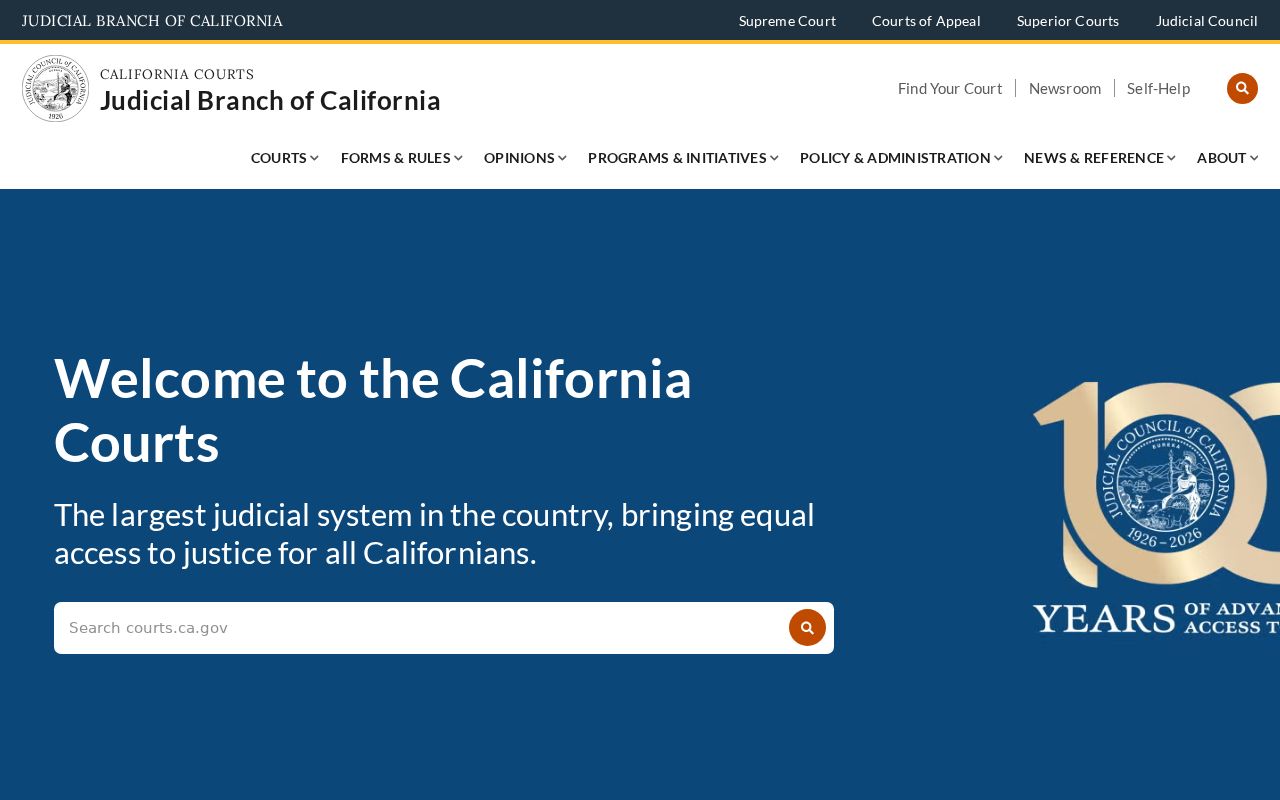
The directory entry is only a pointer. It never replaces the local clerk, the kiosk, or a file request. Use the case number and party roles. That keeps each hit tied to the right court record. Federal matters follow a different path through the Eastern District of California route through PACER, which supports the nationwide Case Locator plus individual dockets and can catch a Riverbank-linked federal case that no Stanislaus Superior Court search will ever show.
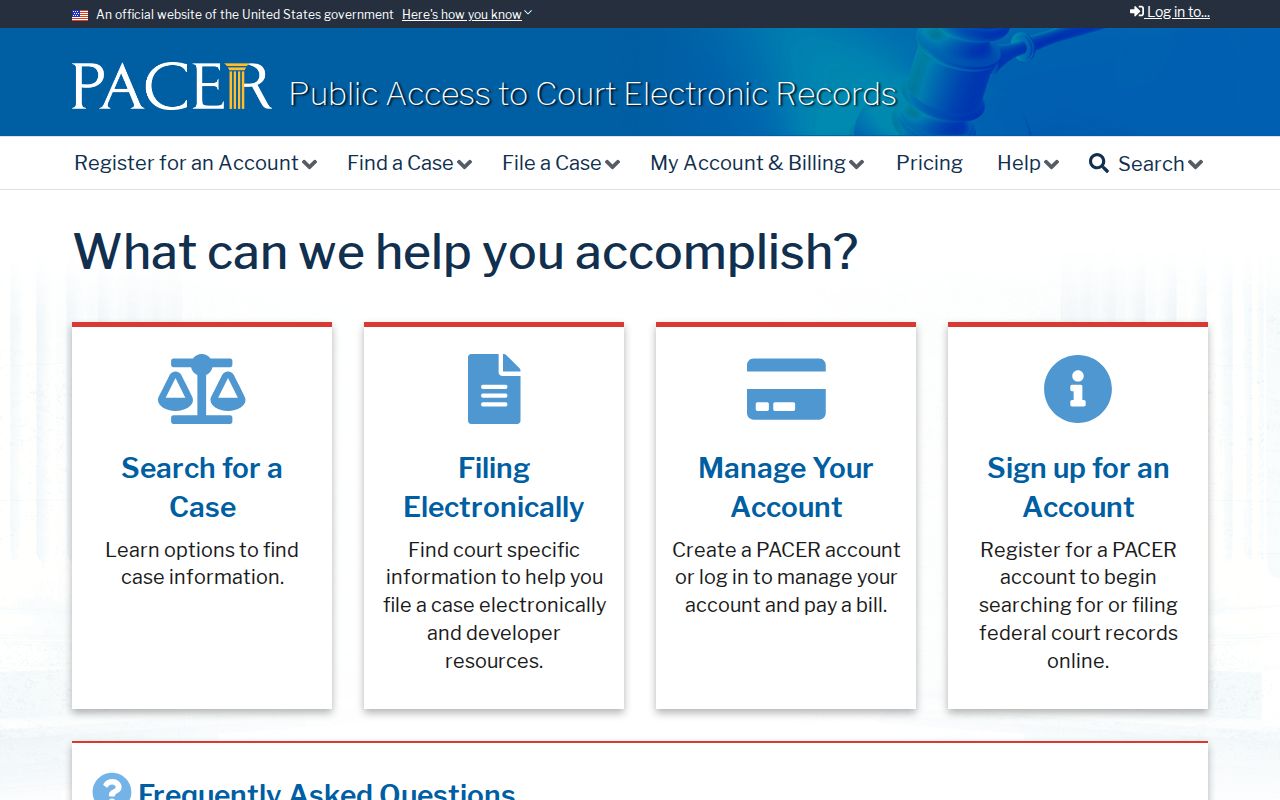
PACER pricing is published at $0.10 per page. A $3 cap covers many documents. Quarterly bills of $30 or less are waived, though you should verify pricing before ordering, since federal records never replace the county court file.
- Docket
- A docket is the court's running case record, listing filings, hearings, orders, and other events by date.
- Index versus image
- An index is a searchable summary; an image is a scanned page or document copy that may require a fee or clerk request.
- Certified copy
- A certified copy is a clerk-attested copy of an official record. Certification confirms the copy, not the identity of every named person.
Note: The index locates a matter, while the clerk controls viewing, copies, retrieval, and certification.
Riverbank Vital Records for a Lookup
Vital records answer questions about a single event, not about where someone lives. An event may have taken place in Riverbank or anywhere in Stanislaus. Start with the county Clerk-Recorder. CDPH-VR serves as the statewide route when the California county is unknown or an amendment is needed. The state publishes no open directory of current birth names. Historical death indexes may exist through archives or genealogy databases, and public-marriage coverage depends on each system's scope.
California draws a hard line between authorized certified copies and informational copies. Health and Safety Code §§103525-103526 require a qualifying relationship plus a sworn statement for an authorized copy. Informational copies can be issued where allowed, but they carry a non-identity legend. Confidential-marriage records stay closed to the public and generally go only to a party or by court order. Adoption records remain restricted as well.
A county application asks for applicant contact details, record type, number of copies, names of the registrant or decedent and any spouses, event date and place, parent names including birth surnames, relationship, purpose, eligibility, a sworn statement, signature, payment, and a return address. Mailed authorized-copy requests generally need notarization, and the forms come in English and Spanish. CDPH's published standard charges are $29 for birth, $24 for death, and $17 for public marriage. Stanislaus announced 2026 state-mandated increases. Confirm the current county schedule.
Divorce research runs through a separate channel. The Superior Court holds the file and the decree. CDPH can issue a Certificate of Record for divorces from 1962 through June 1984. That certificate is not the decree itself. CDPH's amendments and corrections line is 916-445-2684. For pre-1905 events, county registers, church and cemetery records, newspapers, and genealogy catalog material fill the gap. Statewide civil registration was standardized in 1905. Any Riverbank name search should treat an index clue as a prompt to order the right copy, never as permission to bypass eligibility.
Myth check. California vital access turns on record type, relationship, and statute, not on one automatic 100-year or 50-year clock.
Note: An informational copy documents the event while its legend prevents it from establishing identity.
Riverbank Voter Status Is Self-Only
California's My Voter Status tool verifies the person who fills in the form. It asks for first name, last name, exact date of birth, and either California driver's license or ID details or the last four digits of a Social Security number, depending on the credentials used. The return can show registration status, party preference, polling or election information, and vote-by-mail status. It does not list Riverbank voters by street, ZIP, or neighbor.
A qualified voter-file request runs on a different track. The state application asks for the requester's contact information, beneficiary or organization, qualification, allowed-purpose boxes, an intended-use and security narrative, scope, delivery method, signature, ID, and payment. It can be mailed or hand delivered, never faxed or emailed. Processing is stated as 7-14 business days. Charges run $15 per 1,000 records up to $100, or $30 per specific voter up to $100.
Approved uses derive from Elections Code §§2188 and 2194 and Government Code §7924.000. Election, scholarly, journalistic, political, and governmental purposes may qualify. Commercial or marketing use, harassment, unapproved transfer, and unsecured posting are all prohibited. Excluded fields include driver license or ID numbers, last-four digits, the unique identifier, signature images, and confidential voters. Stanislaus Elections sits at 1021 I Street, Suite 101, Modesto, phone 209-525-5200; Riverbank municipal elections consolidate with the county.
Myth check. A voter-status result confirms only the person who submitted the identity details. It is not a public voter search or a block directory, and participation history never reveals candidate or ballot choices.
Note: My Voter Status verifies the requester, while a voter-file request is a separate purpose-bound process with its own application and fees.
Riverbank Resident Heir Trails
Some questions hinge on relationships, not street addresses. Probate petitions and published notices can name a decedent, a petitioner, heirs, devisees, and the parcel tied to an estate. Sensitive exhibits stay restricted. Deeds and obituaries often reinforce the same trail. A query to the Genealogical Society of Stanislaus County can reach deeper. Its holdings include probate, coroner, church, cemetery, voter, and veteran compilations. A surname registry drawn from pedigree charts is there too.
Stanislaus Library Special Collections is the specialist doorway for the region. Its main reading room is secured during a renovation that runs through September 2026. Email or call ahead and ask about remote queries or digital material before planning a trip. GSSC queries cover its own collection only. Both members and nonmembers can submit them. NewsBank's Modesto Bee archive helps with obituaries, legal notices, address mentions, and business references. It needs a library card.
The Riverbank Historical Society and Museum is the hyper-local stop for photographs, organizations, and family-history leads. It publishes no online resident index and no research-fee sheet. Ask instead about surname, street, school, railroad, business, or Army-plant material. Skip requests for private membership rosters. A historical volume often supplies the first address clue. The Riverbank directory book page is the better companion then.
Chasing a former classmate works best with a paired approach. Use yearbooks, Polk or telephone books, the newspaper archive, and an alumni office. A birth-parent search runs through California adoption-information channels, statutory court routes, or the California Department of Social Services. An open birth-certificate search is not available there.
Riverbank License and Business Matches
Business and professional files can split two people who share a name. The California Department of Consumer Affairs (DCA) Search accepts a board or bureau. It also takes license type or number, business name, first, middle, and last name, city, state, county, and ZIP. Results may include licensee, number, type, status, and issue or expiration dates. They may also show a board-disclosed address, discipline, and public documents, all subject to the board.
The California Secretary of State's bizfile portal searches corporations, limited liability companies (LLCs), and limited partnerships (LPs). You can search by name or entity number. Returns can show entity name, number, status, jurisdiction or filing date, and principal or mailing address. They may also list an agent and available statements or images. A Stanislaus fictitious-business-name search is done by the public at the Clerk counter. Staff does not run it for you. Duplicate names are possible. Business and Professions Code §14411 gives the first filer a rebuttable presumption. A new statement is generally published weekly for four successive weeks.
Treat the California Department of Consumer Affairs search as a public license check. Never treat it as proof of a home address. Its results can still help a Riverbank name search by attaching a board and a status to a person.
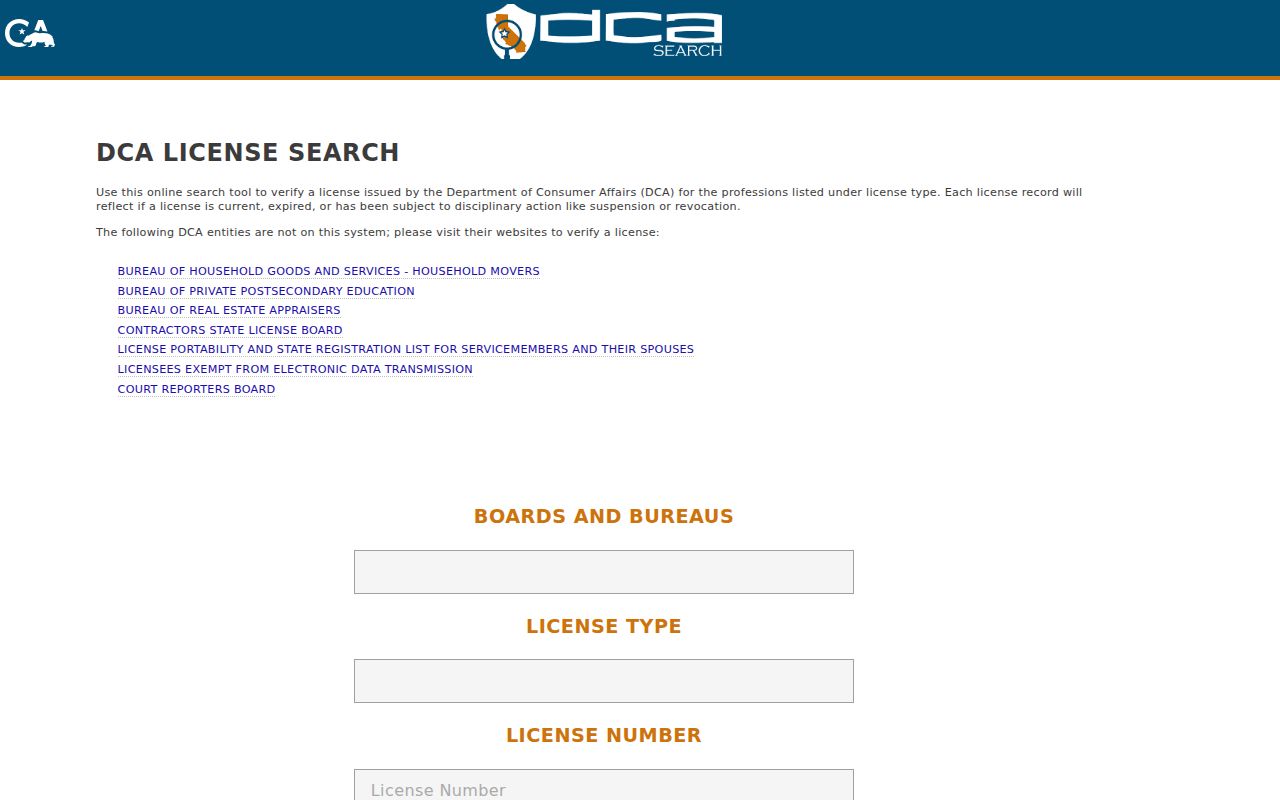
A filed address may point to an agent. It may also point to an office or a mailing drop rather than a person. Read a DCA result as an affiliation clue. Then go back to a county or court custodian for a separate identity anchor.
An older name can also surface in the California State Controller unclaimed-property search. Searching is free. A claim demands proof. Use any old name or address tie as a lead only. Then return to a custodian record.
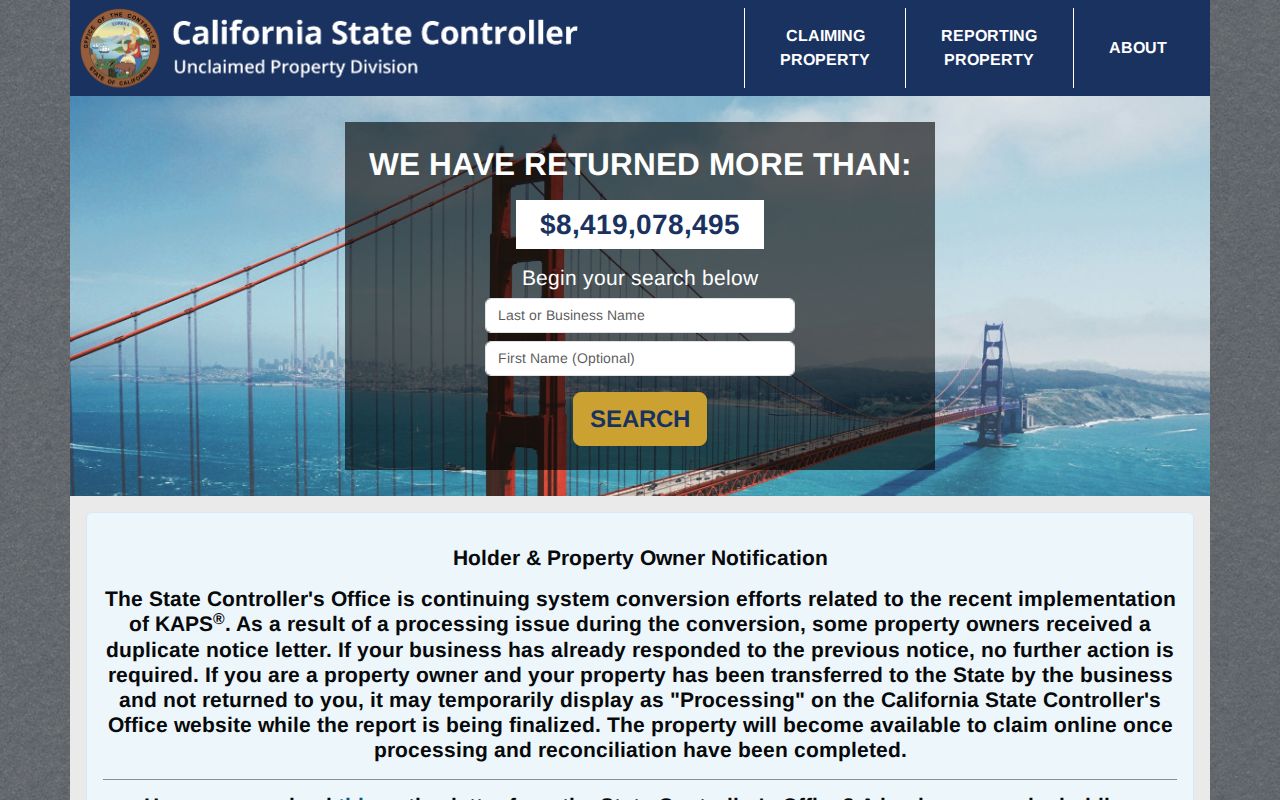
Unclaimed property is a reported relationship, not a current location. It can explain why a name variant shows up in a Riverbank name search without ever turning that result into an identity match.
Riverbank Statewide Record Cross-Checks
State tools answer narrow questions well. The California Department of Corrections and Rehabilitation Incarcerated Records and Information Search (CDCR CIRIS) supports first-name, last-name, and CDCR-number lookups. Available fields may include the CDCR number, age, admission date, current location, and parole eligibility. For county custody questions, the Sheriff's official site is the route to navigate. Booking or arrest data never proves guilt. Confirm any case and its disposition through Superior Court.
The California incarcerated-person search stands apart from a county court lookup. Read it within its own displayed fields.
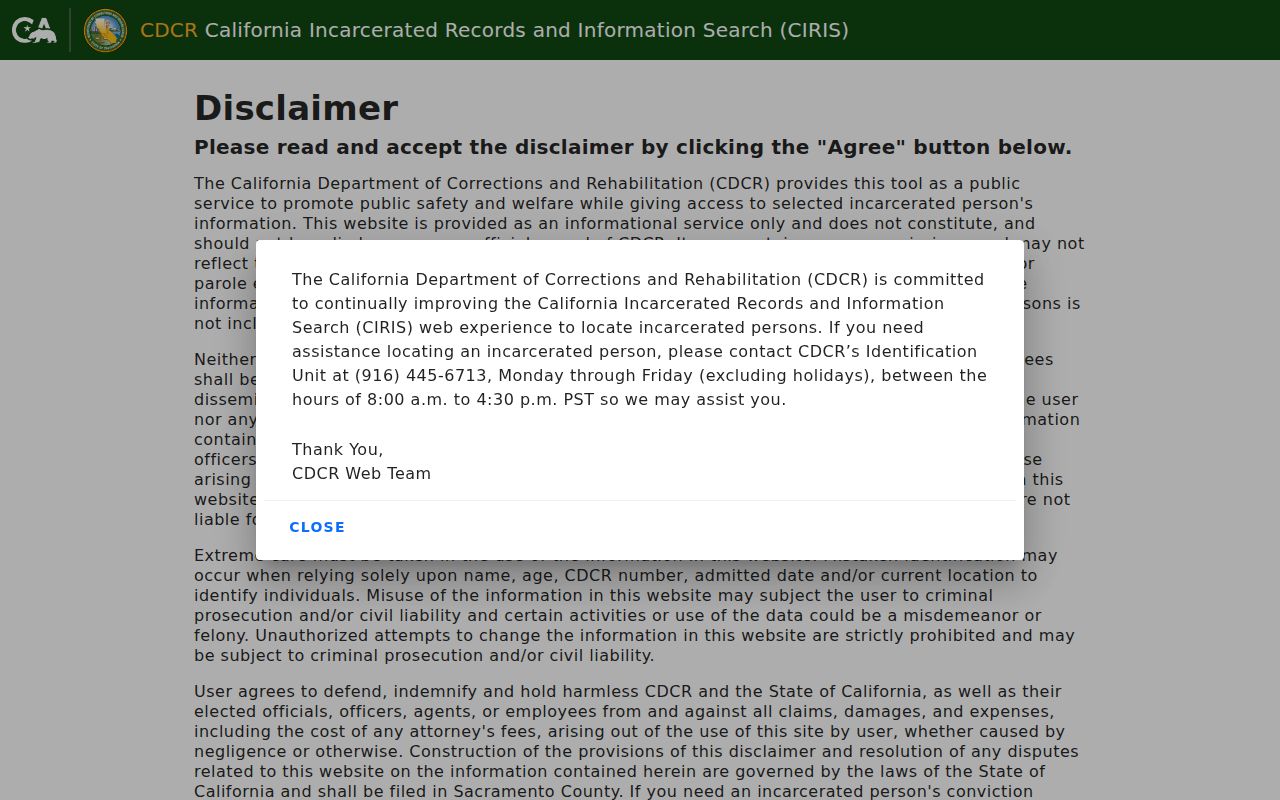
In a Riverbank name search, a state result counts as one cross-check among several. It cannot resolve a common name alone. Compare the case, the date, and the official custodian before concluding anything.
The California Megan's Law search offers name and map or address-area modes. Registrant and offense information is displayed under statutory limits. Its official warnings prohibit harassment and misuse.
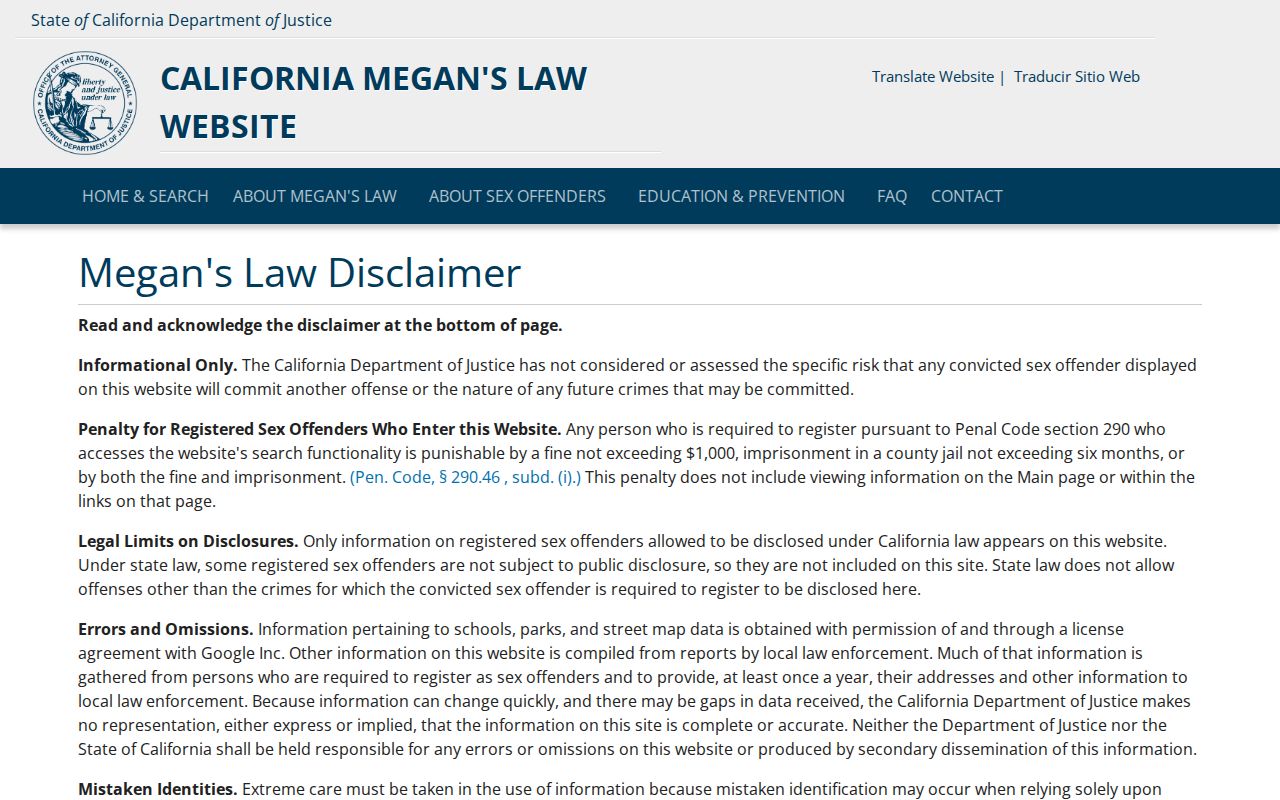
Use that registry only for its stated safety purpose, and never treat a name or mapped result as a substitute for a court disposition or an identity anchor.
Riverbank Privacy and Lookup Stops
Some Riverbank records are closed on purpose. A responsible resident lookup stops where the source stops. Safe at Home, under Government Code §§6205-6211, gives eligible participants a substitute mailing address. It also gives them confidential voter registration. Agencies and courts must accept both. The program does not erase what was already public. Government Code §6209.5 can extend substitute-address treatment to certain property filings. However, a legal description may still reveal the property itself. Voter fields, DMV files, and utility records carry their own limits. Adoptions, confidential marriages, juvenile matters, and sealed cases do too.
The CCPA and CPRA, Civil Code §1798.100 et seq., give consumers rights against covered businesses. These include the rights to know, delete where allowed, and correct. Consumers may also opt out of sale or sharing, limit sensitive-information uses, and be free of discrimination. Global Privacy Control signals an opt-out. A business generally must honor a sale or sharing opt-out within 15 business days. But public government information, including official real-estate and property records, falls outside the statute's personal-information definition. So a privacy request cannot erase an official deed or assessment roll.
California's Delete Act, SB 362, created the Delete Request and Opt-out Platform, known as DROP. Its regulations were adopted September 26, 2025. They were filed November 6, 2025. They took effect January 1, 2026. The platform is live in 2026. DROP forwards deletion requests to registered data brokers, subject to exceptions. It cannot delete Stanislaus court files, deeds, or vital records. DMV data stays restricted under the federal Driver's Privacy Protection Act, 18 U.S.C. §§2721-2725, and state law.
Lawful personal use. Use a Riverbank resident lookup for family history, an heir trail, civic research, or verification of a public filing. Never use records to stalk, harass, intimidate, or harm anyone. California stalking is addressed by Penal Code §646.9, and civil-harassment orders use Code of Civil Procedure §527.6.
Correct the Riverbank Source Record
A copied directory entry cannot change the official source. If a court index, deed index, vital record, voter record, license, or business filing shows a mismatch, ask the custodian that created it. That office can explain correction, amendment, sealing, or copy procedures. Keep the exact spelling handy. Note the case or instrument number, APN, date range, record type, and source URL. A clerk can explain the route without vouching for anyone's identity.
For a Riverbank municipal record or permit trail, the City Clerk's California Public Records Act request form accepts email, fax, mail, or counter submissions. It also lays out the ten-day determination notice and duplication rates. Keep the request narrow. Name the record series and the date range. County deeds, courts, vital records, and voter rolls belong with their own custodians. The city does not hold them.
A source may require a certified copy. Order it from the office that holds the record. Keep the receipt, request number, response, and any correction decision in one file. A Riverbank name search ends best at a named record custodian. Skip the unverified copy.